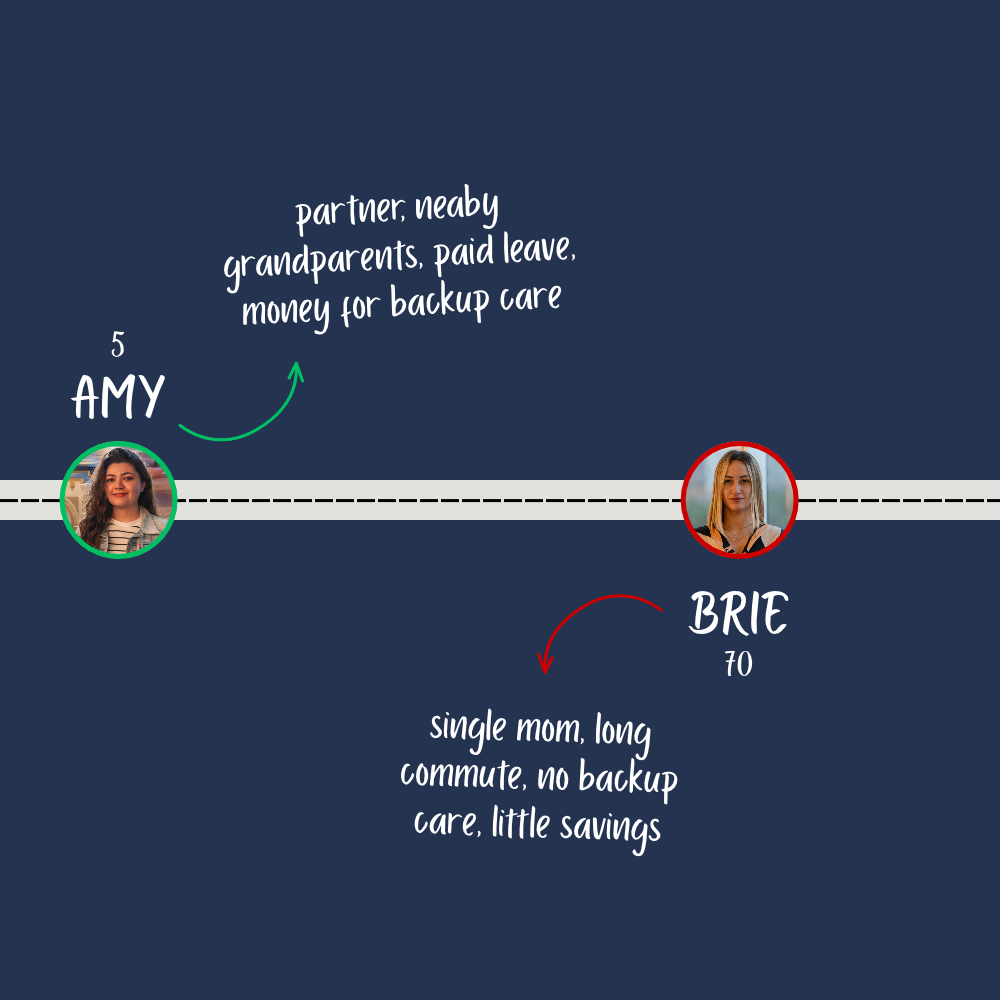
Same 20 hours.
Different breaking point.
When life asks for more than a woman has, that’s The Capacity Gap.
We keep counting the wrong thing.
Most talk about women and caregiving in hours: hours per week, years out of the workforce. Those numbers matter, but they can’t show who’s okay and who’s one bad week from falling apart.
The Capacity Gap asks something else: how much is life demanding of her, compared with what she actually has to carry it?
That question changes how every opportunity looks. A job offer, a promotion, or a new benefit at work only helps if she has room to act on it, and plenty of women don’t. Unequal capacity means unequal access to the same opportunities.
The goal is to see the breaking point coming and get her help before she hits it.
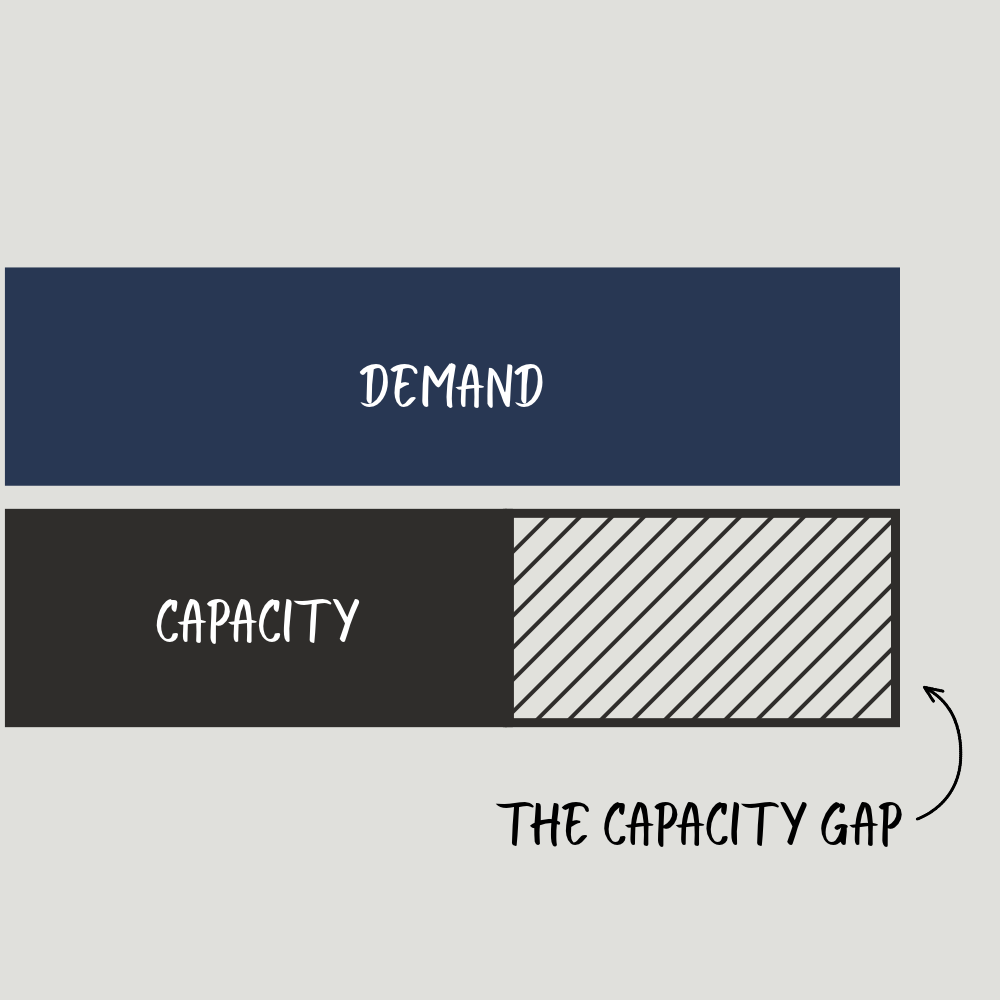
Everyone has stuff to deal with. Everyone has some help. The Capacity Gap Index turns the difference into a score. The higher the number, the more life is asking compared with what you’ve got.
The Capacity Gap Index is an annual national study starting in 2027. When employers, benefits providers, and lawmakers can see where women’s capacity falls behind demand, they can stop guessing what to fix.
Can we predict someone’s breaking point before they hit it, and help them before it’s too late?
One number for how much life is piling on.
Meanwhile, there’s help for big decisions.
As featured in Fast Company.
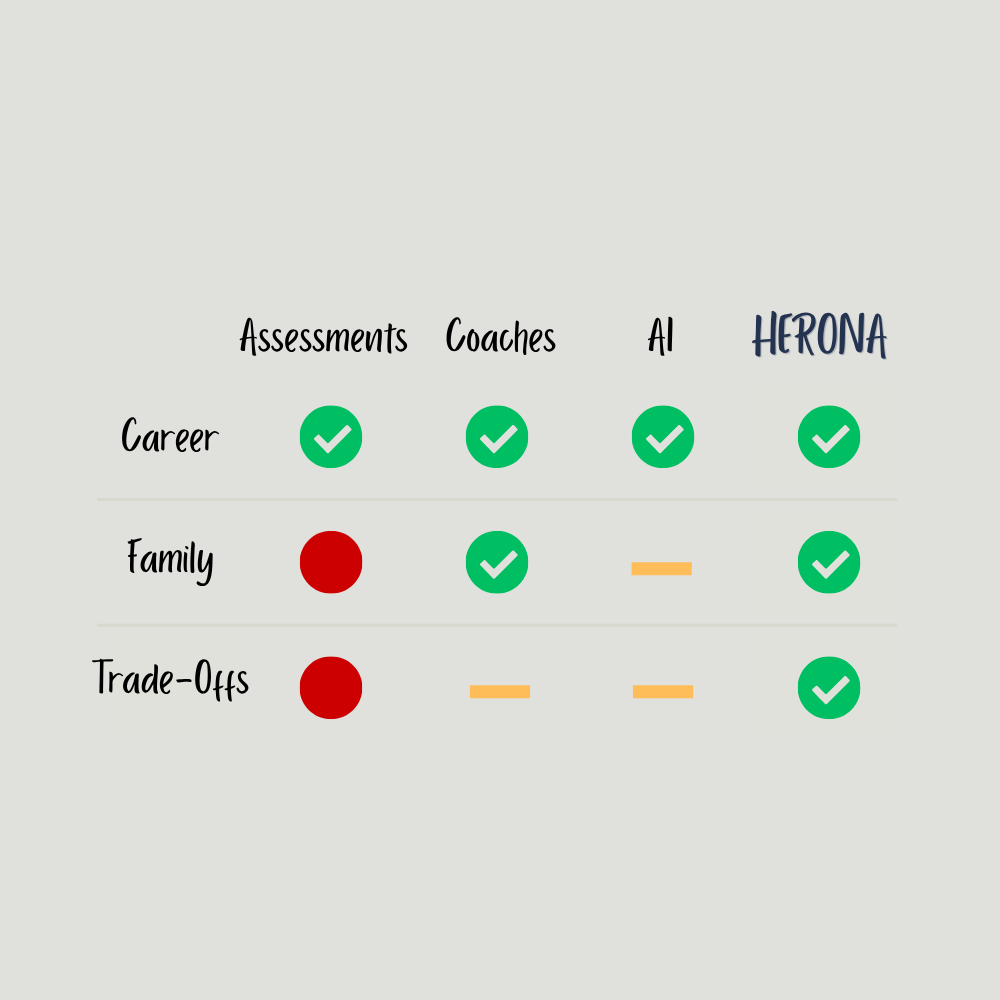
Most career tools start with the job: pay, title, next step. None of them ask what a woman’s life can hold.
HERONA is a free scenario modeling tool that starts with her life. It shows what a career move would cost her in time, money, energy, and support, then asks whether her life can actually sustain it. A decision can look great on paper and still break her. HERONA helps her make one she can live with.
HERONA conversations aren’t used in Capacity Gap research.